
Beyond the milestone: what two million shifts says about predictable coverage
Two million shifts
Medely recently crossed two million shifts worked through its platform. Two million instances of a credentialed clinician showing up to cover a real need at a healthcare facility.
For the official announcement and additional details, see the press release.
What two million represents
What matters is what each shift represents.
Every shift worked through Medely is a credentialed, vetted clinical professional matched to a facility that needed coverage: on time, with the right qualifications, without the overhead of a traditional agency relationship. A surgical tech showed up to an ASC who would otherwise have had to cancel a case. A CNA in a skilled nursing facility helping a resident through a difficult night. A nurse filling a gap an internal float pool couldn’t absorb.
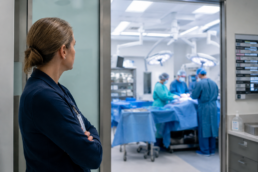
Two million times, patient care didn’t get delayed, an OR didn’t go dark, or a unit didn’t run short because the coverage showed up.
How a shift actually gets filled
Milestones like this follow from investing in the parts of healthcare staffing that determine whether a shift is truly covered: credentialing, compliance, speed, and trust.
Median time to credential approval at Medely dropped from roughly 14 days in 2024 to under 24 hours today. A professional who decides to work through Medely on a Monday can often be placed and working by Tuesday. For a facility manager trying to fill a shift 48 hours out, that’s the difference between covered and closed.
The platform also gives facilities tools traditional agencies don’t offer: a favorites list to build a reliable bench of known professionals, real-time shift posting and pickup, and full visibility into who’s coming through the door before they arrive.
The facilities that changed how they staff
The facilities that have contributed most to this milestone shifted how they think about contingent staffing.
The old model was reactive: something goes wrong, you call an agency, you pay a premium, you hope for the best. The facilities driving the most volume through Medely treat contingent staffing as part of the plan, not a last resort.
Townsen Memorial Hospital uses Medely to fill urgent shifts fast while building continuity through a bench of favorited professionals. In three months, Townsen filled 96% of shifts within an average of nine minutes, maintained a consistent workforce of 210 favorited professionals, and saved $46,566 (16%) versus traditional agencies.
Hunterdon Center for Surgery has used Medely’s favorites and continuity features to keep ORs open when their own staff couldn’t cover. In their words: without Medely, they would have had to close surgery centers.
Those examples show what’s possible when facilities treat flexible labor as part of the operating plan. But this milestone wouldn’t be possible without the dedicated clinicians who step in, pick up the work, and keep care moving.
What clinicians built along the way
For many nurses, surgical techs, and allied health workers, contingent work through Medely is a deliberate choice. The platform gives them control over when and where they work: the ability to pick up shifts that fit around their lives, build toward financial goals on their own schedule, and develop experience across different facility types without being locked into a single employer. One clinician described how Medely helped their mental health,
“A more flexible schedule has helped me improve mental health, have stronger relationships with family and friends, and better work-life balance, including time to pursue hobbies, travel, or just decompress.”
Medely’s favorites feature reinforces this in both directions. Facilities build a bench of trusted professionals; those professionals build a network of facilities they know and prefer. Continuity follows from earned trust, not a contract.
“I try to pick up shifts at the facilities I am a favorite at because I know they like having consistency,” described another clinician who picks up shifts with Medely.
That’s a different kind of workforce relationship than healthcare has traditionally offered. Two million shifts in, it’s working for the people on both ends.
The gap isn’t closing on its own
Nurse vacancy rates remain between 10 and 15 percent nationwide. HRSA projects registered nurse demand will outpace supply by 9 percent by 2036. ASCs compete with hospital systems for the same pool of surgical techs and OR nurses, often losing on base compensation.
Our focus is on making coverage more predictable, less built on someone scrambling at the last minute and more built on infrastructure that works before the situation becomes urgent.
That means faster, more reliable credentialing so facilities can staff with confidence and clinicians can pick up work without delays. Stronger continuity so the same clinicians return to the same units. And smarter workforce tools like Talent Fusion, which enables leaders to start with their core teams, flex internal resources first, and use contingent labor strategically to protect both coverage and cost.
While two million shifts is a milestone worth celebrating, the work now is to make the next two million less about last-minute scrambling and more about dependable systems: stronger core teams, smarter internal coordination, and flexible coverage that’s there when it’s needed.
Because when staffing works, everything else in healthcare works better; for leaders, for clinicians, and for the patients they serve.