
What June’s jobs report tells you about the rest of 2026
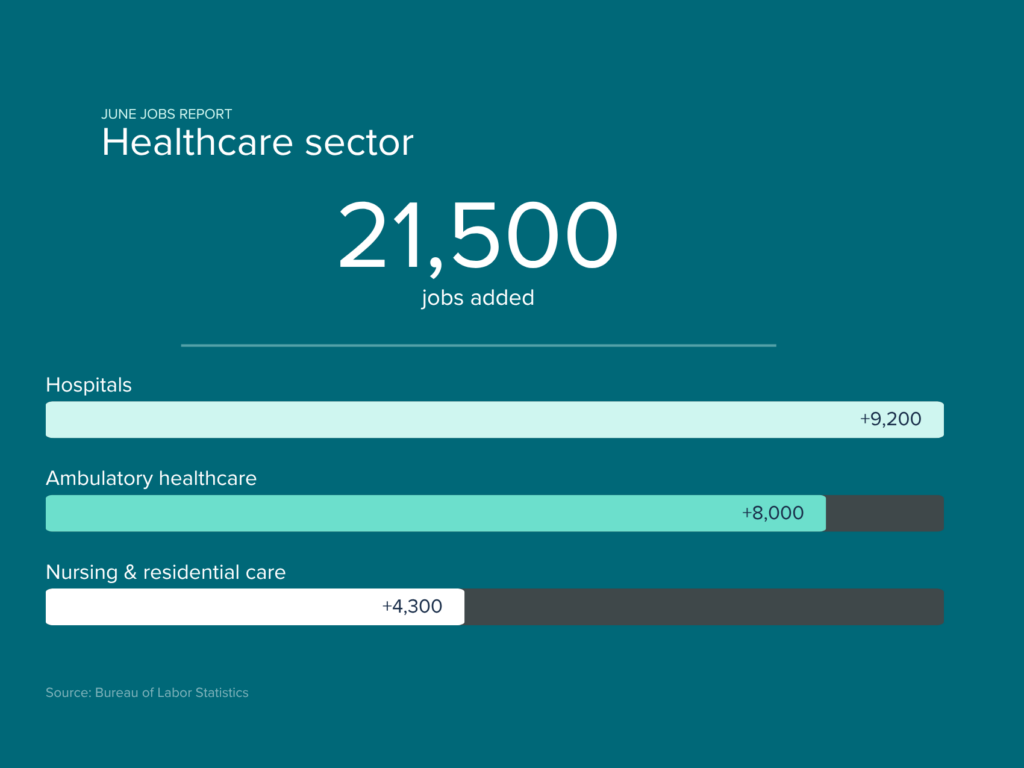
Healthcare added 21,500 jobs in June, well under the 12-month average of 38,000. Demand for care hasn’t eased; the full-time hiring model has just hit its limits.
You can see those limits everywhere on the ground: persistent open roles, long time-to-fill, higher patient acuity, and a workforce running on fumes. Staffing Industry Analysts reports that healthcare and social assistance job openings have held near 1.3 million since late 2024, and healthcare still takes longer to fill a role than any other industry SIA tracks. Put those two facts together and the message for hospitals, health systems, ambulatory centers, and post-acute facilities gets simple: waiting for the permanent hiring pipeline to recover isn’t a strategy. Build around flexibility, speed, and bench depth now, or watch facilities that already have pull ahead.
The numbers: hiring slowed, open roles didn’t
If we break down June’s job volume, the slowdown shows up across all segments. Hospitals added 9,200. Ambulatory healthcare services added 8,000. Nursing and residential care facilities added 4,300. All three came in soft, which is why the total landed so far under the 38,000 monthly average.
That’s a sign the gap between what facilities need and what they can hire is widening. SIA’s numbers back this up: openings near 1.3 million since Q4 2024, and a smaller share of those roles filled than in any other industry SIA analyzed. Read that softer hiring number as a softer labor market, though, and you’ll misjudge what your facility actually needs. The shifts still need covering, patient volume still needs support, and your permanent team still needs relief, whether or not the jobs report looks encouraging this month.
Why the pipeline can’t fix this
The pressure is coming from several sources: structural shortages, burnout-driven attrition, rising acuity, financial strain, and a hiring cycle that keeps stretching out. All of these factors are compounding at once, and they feed into one another.
Take burnout. It’s not a leftover pandemic symptom anymore; clinical leaders now describe it as layered, harder to trace to a single cause, and it doesn’t stay contained to the roles that are vacant. When facilities leave ancillary roles unfilled, nurses absorb the non-nursing work. When permanent teams stretch thin, overtime climbs. When overtime climbs, people leave, which opens more roles, which stretches the remaining team further. Time-to-fill data makes that loop visible: if it takes longer to fill a healthcare role than a role in any other industry, you can’t plan around vacancies closing fast enough to meet demand, even when a facility genuinely wants to hire.
What leading facilities do differently
The facilities moving fastest haven’t given up on permanent hiring. They’ve stopped relying on it alone, and that shift shows up in three places: they build a bench of trusted, credentialed professionals who can step in when demand shifts or gaps open; they treat contingent labor as a planned part of the workforce instead of a last resort; and they build a staffing waterfall so they have options lined up before a shift turns into a crisis.
In practice, a stronger staffing strategy looks like this:
- A core permanent team for baseline coverage
- A reliable per diem bench for predictable fluctuations
- Float or internal resource pools where available
- Contingent options for hard-to-fill shifts, seasonal spikes, and urgent gaps
- Clear rules for when to activate each layer
Layer those together and you get control: you plan around the labor market you actually have instead of reacting shift by shift. Permanent hiring still matters here. It’s just no longer fast enough or flexible enough to carry the whole load on its own.
The question has changed
June’s report is one data point, but it confirms what healthcare leaders already know: this staffing problem is structural, not seasonal or temporary. So the useful question isn’t how to hire more. It’s how to staff smart with the workforce you can actually reach, which means building flexibility before the next gap opens, protecting your permanent team from absorbing every shortage, and shaping a workforce model that flexes with demand instead of waiting on a hiring market that isn’t coming back the way it used to look.
Medely’s Talent Fusion platform helps healthcare facilities manage their entire workforce strategy; from optimizing core staff and internal resources to expanding access to trusted, credentialed professionals who can support coverage when and where they’re needed.
Learn how Medely can help your team build a more agile, resilient workforce before the next staffing gap.