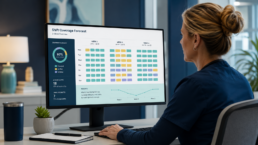

The final phase of HB 2697 starts July 1. Here’s what you need to know.
On July 1, Oregon hospitals will need to comply with tighter nurse-to-patient ratios in med-surg units.
The ratio is lowering from 1:5 to 1:4 and is the final phase of HB 2697, the landmark safe staffing law passed in 2023 and championed by the Oregon Nurses Association.
This change won’t only impact Oregon hospitals; it will have a ripple effect throughout the country. For any facility competing for nurses in adjacent markets or any healthcare leader watching national staffing trends, this shift is worth paying attention to.
What does HB 2697 change?
While staffing requirements have been in place for years, the systems in place to enforce these requirements were slow-moving and inefficient, allowing staffing gaps to continue.
But the passing of HB 2697 changed that. The 2023 legislation revamped how violations are handled. With mandatory investigation timelines in place, hospitals can face civil penalties of up to $5,000 for repeated violations,
For the first time, the law has real consequences.
The ratios it established are also broader than most people realize. HB 2697 set minimum nurse-to-patient standards across a wide range of acute care settings:
- ICUs: 1:2
- Emergency departments: 1:4 averaged across the shift (1:5 max at any moment; trauma patients are 1:1)
- Labor and delivery: 1:2
- Operating rooms: 1:1
- Medical-surgical units: 1:5, tightening to 1:4 on July 1, 2026
- CNA: A maximum of seven patients per CNA on day shifts and 11 on nights.
The ripple effect on outpatient and post-acute facilities
When acute care hospitals are required to staff at higher ratios, there’s more competition for the same pool of available nurses. And with potential fines in place for noncompliance, hospitals will often pay higher rates, offer bonuses, and extend contract lengths. In doing so, they pull talent away from the facilities that don’t have the same regulatory pressure or the same budget to match.
Healthcare leaders across the country have shared that hospitals are actively advertising premium wages to attract talent. As more nurses and health professionals search for flexibility and higher pay, turnover accelerates. Facilities that were adequately staffed have found themselves short without having changed anything about their operations.
The typical response has been to turn to contingent labor. Per diem and on-demand staffing platforms allow facilities outside the hospital system to access the same qualified professionals without competing head-to-head on salary for permanent hires.
What healthcare leaders should do now?
Regardless of whether your facility is in Oregon, the July 1 shift is a signal worth acting on.
Build your contingent bench before you need it. The facilities that fare best during labor market disruptions are the ones that already have established relationships with qualified per diem professionals, not the ones scrambling to fill gaps when the market tightens.
Understand your local market dynamics. If you are in a metro area with major hospital systems, watch their job postings and compensation packages. If they are increasing wages to meet ratio requirements, your facility will feel the downstream effect on retention and availability.
Treat per diem as infrastructure, not backup. The most operationally resilient facilities are moving away from the model of per diem as a last resort. A well-managed flexible workforce functions as a core operational layer, not just a bandage.
The broader context of HB 2697
While Oregon’s law is the most comprehensive in the country right now, similar legislation is popping up across the country. National legislation mirroring these ratio requirements has been introduced in Congress (H.R. 3415, the Nurse Staffing Standards for Hospital Patient Safety and Quality Care Act of 2025).
The potential change in policy is driven by persistent nurse shortages, high turnover, and documented links between staffing levels and patient outcomes.
HRSA projects that RN demand will outpace supply by 9 percent by 2036. The healthcare labor market will remain tight. And facilities that have built flexible, scalable workforce infrastructure now will be better positioned than those waiting to see how policy evolves.
Staffing will get more complex over time, but facilities that have planned ahead and have systems in place are able to handle those changes seamlessly.
Find per diem professionals in Oregon here.