
Explaining the generational healthcare staffing shortage
The healthcare staffing shortage usually gets framed as a pipeline problem: too few nursing graduates, too few incentives to enter the field, too few seats in clinical training programs.
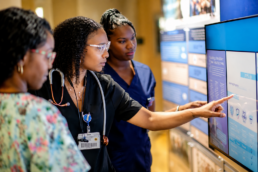
A new study in the Joint Commission Journal on Quality and Patient Safety points somewhere else. Leaders from four major health systems in the Dallas-Fort Worth metroplex describe a workforce with five distinct generations of clinicians working side by side for the first time in modern medicine. Most healthcare organizations have no plan for what that means.
The researchers have identified the problem correctly. Fixing it takes more than a culture initiative. It takes a different staffing model.
The generational tension hiding inside your staffing data
When a senior OR nurse with 25 years of experience retires, she takes more than a shift with her. She takes institutional memory, informal mentorship networks, patient rapport, and judgment built from decades of high-stakes repetition. The study authors note that replacing one experienced physician can require hiring several younger clinicians just to approximate her output, and even then something gets lost.
Younger clinicians are entering the profession with a different contract in mind. They expect flexibility, mental health support, and employers to accommodate a life outside a 12-hour shift.
Both sets of expectations are reasonable, but few workforce strategies address both at once.
COVID-19 erased whatever buffer used to separate those two realities. Burnout accelerated retirements among experienced clinicians and sharpened, for younger nurses and techs, exactly what they would and wouldn’t tolerate.
This shift resulted in early-career exits, mid-career burnout, and late-career departures, all happening at once, with no clean handoff connecting them.
The structural fix
The study recommends intentional mentorship, retention-focused benefits, flexible late-career roles, and multi-generational representation in leadership decisions. Each is worth doing, but one thread runs under all of them, and academic literature rarely names it directly: the workforce has to be built to flex.
Rigid scheduling doesn’t work for a 62-year-old surgeon who wants to wind down gradually while still contributing. It doesn’t work for a 29-year-old travel nurse who chose per diem to keep control over when and where she works. It doesn’t work for a nursing director trying to fill a Saturday night CNA shortage at 9 p.m.
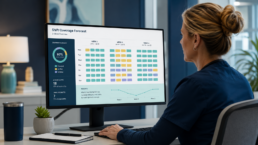
The facilities handling this well have built a tiered staffing model: core staff, float pool, per diem, travel, and agency labor, arranged in a sequence that a platform routes demand through, starting with the least expensive appropriate source before escalating. That model works because it fits the range of clinicians actually in today’s workforce, not just the ones who fit a legacy scheduling paradigm.
Experienced clinicians who want to cut hours without disappearing from the workforce find per diem work fits. Early-career nurses testing different care settings get the same flexibility from per diem and short-term contracts. Facilities get something too: a deep, well-managed flexible bench means fewer crisis staffing decisions and lower exposure to the premium labor costs that come with them.
What this means for facilities competing for talent
Competition for clinical talent isn’t easing. HRSA projects registered nurse demand will outpace supply by 9 percent by 2036. Generational change created this shortage, and closing it will take about a generation.
The staffing decisions facilities make in the next two to three years will set their competitive position for a long time after. Facilities that invest now in flexible scheduling infrastructure, per diem bench depth, and workforce platforms that cut friction for clinicians and schedulers alike will attract and keep talent across every generation in the workforce.
Facilities that don’t will keep paying a premium to fill gaps as they open, and the gaps will keep opening.
Researchers from Texas A&M frame it this way: “Clinicians are people first, with lives, families, identities and limits. When leaders design roles and cultures that honor that humanity, they strengthen commitment, stabilize teams and build a more resilient healthcare system.”
That applies to a 60-year-old ICU doctor looking for a graceful off-ramp and to a 27-year-old surgical tech comparing three staffing agencies on a Tuesday morning. Build for both, and the advantage compounds.